How to size a ceiling dehumidifier, the honest way.
Most sizing charts pretend a square foot is a square foot. It is not. Two rooms the same size — one with three occupants and a glass curtain wall, one empty and sealed — need very different units. Here is how we actually work it out.
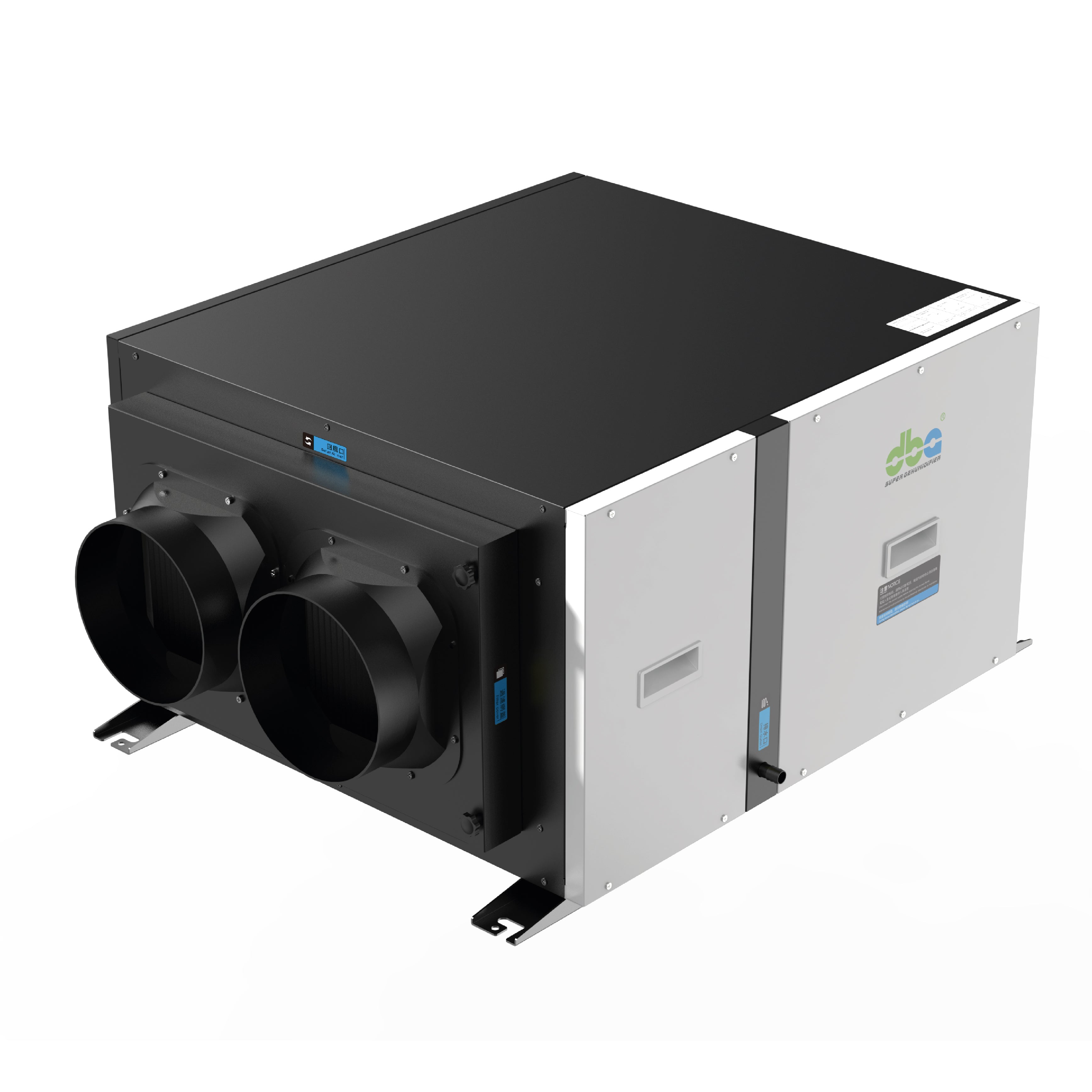
The litres-per-day number on a dehumidifier spec sheet is measured at standard conditions — typically 30°C and 80% RH. The actual capacity you get drops or rises with room conditions. So a unit rated at 68 L/day in the catalogue might deliver 50 L/day in a 24°C bedroom at 60% RH. Sizing is the art of making sure that real-world number still exceeds the moisture load.
Step 1: estimate the moisture load
Moisture enters a room from four sources:
- Outside air infiltration — the dominant load in Singapore. A typical residential unit with mechanical ventilation off but doors and windows imperfect sees 0.3–0.5 air changes per hour. At 32°C / 85% RH outside and 25°C / 55% RH inside, that infiltration brings in around 6–12 L per day per 1,000 sq ft.
- Occupants — each person adds 100–150 g/hour through respiration and skin. Two people sleeping for 8 hours = around 2 L. A four-person family adds 7–9 L/day.
- Activities — cooking, showers, drying laundry. Hanging one load of damp laundry indoors releases 1.5–2.5 L over a day. A long shower adds 0.5–1 L into the bathroom and adjacent space.
- Plants and aquariums — easily missed. A medium fiddle-leaf fig releases 200 ml/day. An open aquarium evaporates 1–3 L/day.
Sum the daily input. For a typical 1,000 sq ft Singapore condo with two occupants and normal use, expect 12–18 L/day of moisture entering the space.
Step 2: add a derating factor
You do not want a unit that runs 24 hours a day at full duty. That is uneconomical, noisy, and shortens compressor life. Aim for 60–75% duty cycle at design conditions, which means picking a unit rated at roughly 1.5× your calculated load.
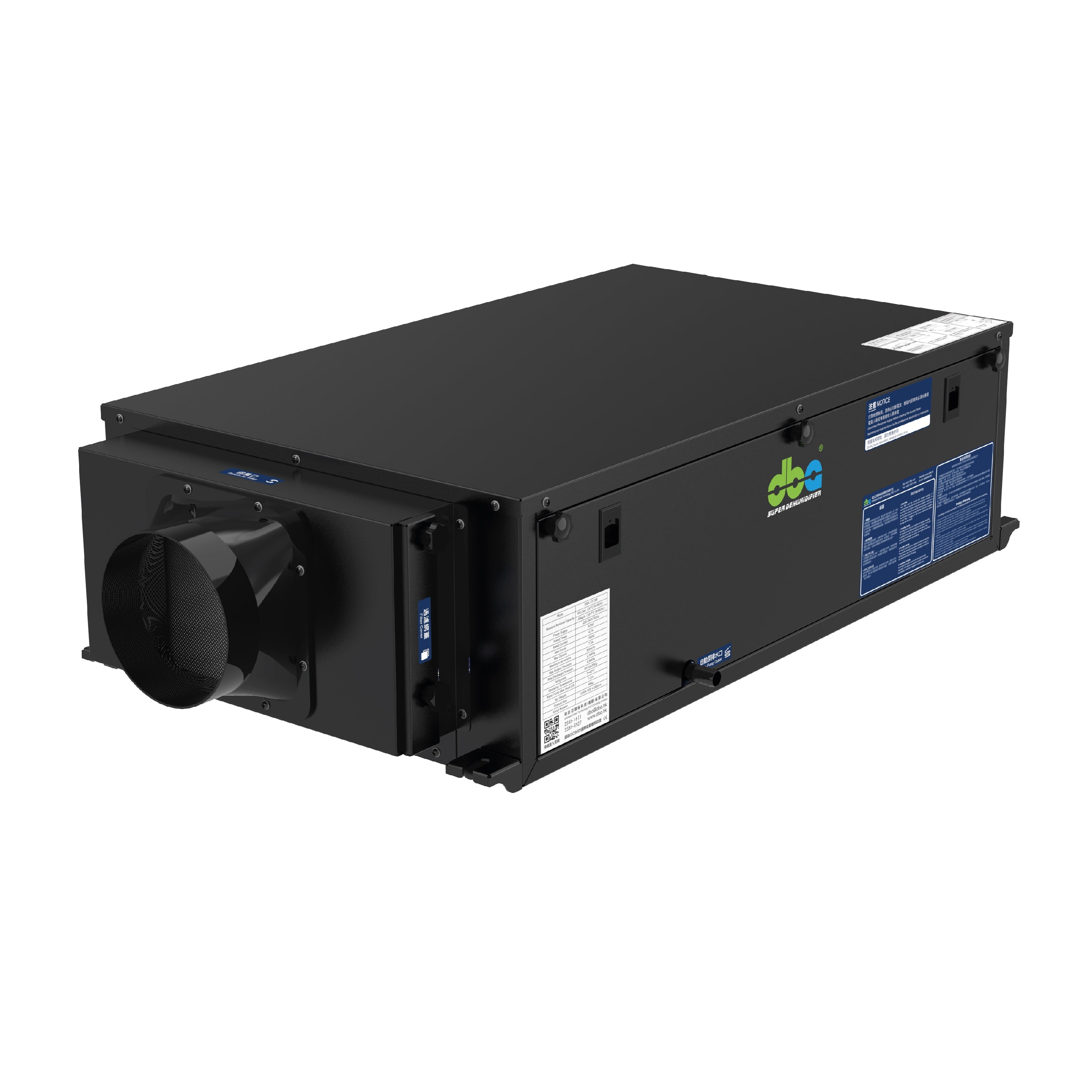
The 12–18 L/day apartment above wants something rated 25–30 L/day. A DBA-UTC20 at 20 L/day is borderline; a DBA-UTC68 at 68 L/day is generous. For most cases we recommend stepping up — the unit will run quietly at part-load and last longer.
Step 3: corrections for room conditions
Rated capacity drops by roughly:
- 30% when room temperature falls to 20°C (cold bedroom with strong aircon)
- 50% when target RH falls to 40% (gallery or wine cellar)
- 20% if outdoor air infiltration is heavy (large windows, frequent door use)
If you stack two of these conditions — a wine cellar at 18°C and 50% RH, say — you may need a unit twice the catalogue rating to deliver the working number. That is the moment we usually move from the standard UTC range into the HC humidity control series.
A simple sizing reference
For typical Singapore residential and light-commercial use at 25°C / 55% RH target:
| Floor area | Typical moisture load | Recommended unit |
|---|---|---|
| 200 – 400 sq ft (studio, bedroom) | 4 – 7 L/day | DBA-UTC20 |
| 500 – 1,000 sq ft (1–2 bedroom) | 8 – 15 L/day | DBA-UTC68 or DBA-DH65 |
| 1,000 – 1,500 sq ft (3 bedroom condo) | 15 – 22 L/day | DBA-UTC120 |
| 1,500 – 2,000 sq ft (4 room HDB, small office) | 22 – 35 L/day | DBA-GEC145LD-HP |
| 2,500 – 3,000 sq ft (showroom, large office) | 40 – 60 L/day | DBA-GEC280LD |
Heavy-load cases
Some spaces need much more than the floor-area rule suggests:
- Basements — moisture migrates through concrete; double the calculated load
- Indoor swimming pools — evaporation can be 100+ L/day for a 30 m² pool
- Post-leak drying — a one-off load of 200–400 L over 3 days; pair a ceiling unit with a portable GEX75 or GEX110
- Walk-in wardrobes with leather — small space, very tight tolerance; oversize and set tighter RH
What undersizing actually feels like
An undersized unit will not "almost work" — it will fail audibly. The compressor runs constantly, the room stabilises at maybe 65% RH instead of 55%, and the runtime cost stacks up because the unit is at full duty 24/7. You will know within a week.
What oversizing feels like
Oversizing is gentler. The unit short-cycles, which wears bearings faster, and you may notice a slight overshoot below setpoint when it runs. The bigger downside is the upfront cost. A 30% oversize is fine; a 200% oversize is wasteful.
The 60-second sizing check
Floor area in sq ft × 0.018 = baseline litres per day at 60% RH target.
Add 1.5 L/day per resident occupant.
Add 5–10 L/day for laundry, basement, or pool.
Multiply by 1.5 to size the unit.
Match to the closest catalogue rating above.
If you would rather not do the maths, send us the floor plan with current RH readings and we will model it properly. Sizing the unit correctly is the easiest part of the project to get right — and the most painful to get wrong.
Want a sized recommendation?
Send us the floor plan.
We will run the calculation and recommend a model. No charge.
Request a quote