Gravity, pump, or both — drainage for ceiling units.
A 68 L/day unit drops a small bucket of water every day. Every day. If that water does not have an obvious, low-friction path out of the ceiling, you will eventually find it staining the plasterboard below.
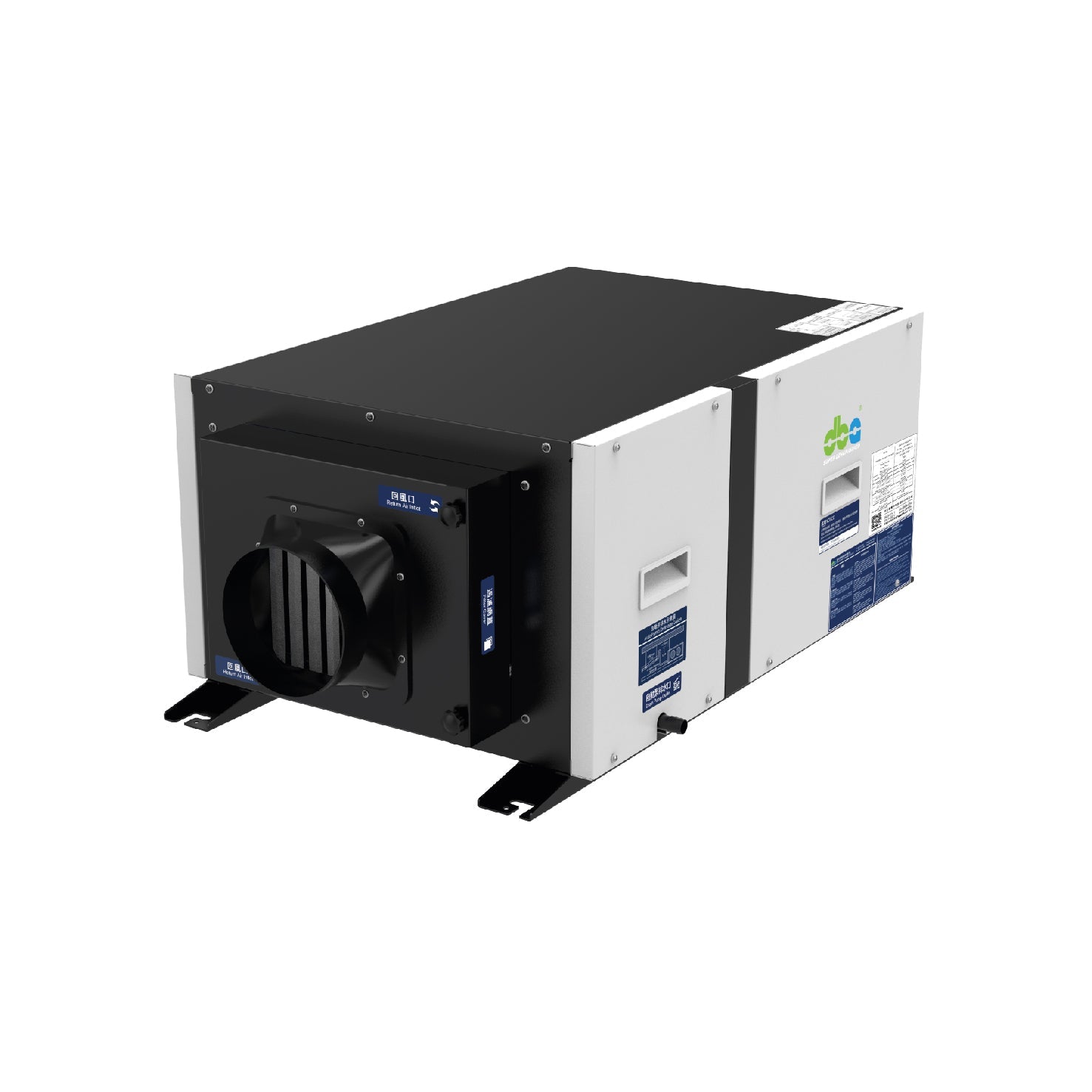
DBA's ceiling dehumidifier range uses one of two drainage methods, and the choice is decided by the unit, not by the project. Get the right method for the model and the rest follows.
Single-phase ceiling units: 1.8 m integrated pump
Every single-phase ceiling model in the DBA range ships with an integrated condensate pump rated for 1.8 m of head. That covers:
- UTC ultra-slim ceiling — UTC20, UTC68, UTC120
- GEC commercial ceiling, single-phase — GEC68LD-HP, GEC145LD-HP
The pump lifts condensate up to 1.8 m above the unit, after which gravity carries it the rest of the way to the drain destination. A check valve is already built into the supplied drain hose, so back-flow to the unit is handled by the unit itself — no separate check valve needs to be specified on site.
The correct routing: up first, then down
The drain line out of the unit should rise vertically toward the high point — anywhere up to the 1.8 m pump head — and then fall by gravity to the discharge. This creates an inverted-U at the top of the run.
The point of the inverted-U is practical: the pump is rated to lift up to 1.8 m, so make full use of that lift, and let gravity handle everything past the high point. The downward leg can be as long as the building requires without further pump load.
Avoid forcing the pump to push water laterally across long horizontal runs. Lift it up first, then let gravity do the rest.
Three-phase ceiling units: gravity fall
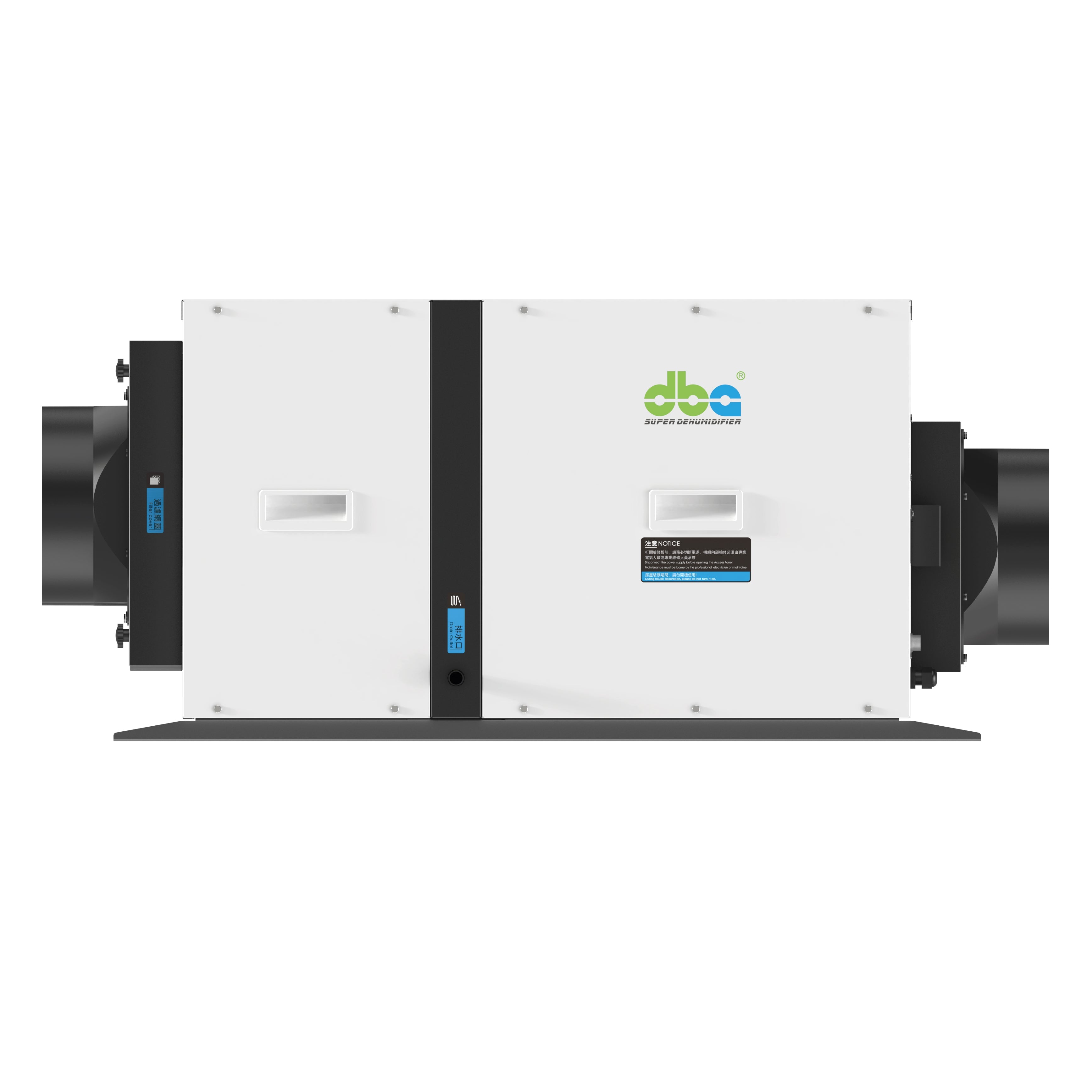
The larger three-phase commercial ceiling models — GEC280LD, GEC400LD, GEC550LD — do not use a pump. They drain by gravity. The drain line must slope continuously downward from the unit to the discharge point with no rising section.
This means three-phase units need to be sited where a falling drain route is physically possible — typically with the unit above a service riser or a soft ceiling where the line can drop directly to a stack.
Discharge destination
Whatever the method, the drain line discharges into an existing condensate stack, a floor trap, or an FCU drain that the building already supports. Treat it the same way you would treat a fan-coil unit's condensate drain.
Commissioning checks
Before signing off:
- Run the unit in dehumidify mode for 30 minutes and confirm water reaches the discharge point
- For pumped units, listen to the pump cycle — short bursts every few minutes is normal; constant running is not
- Open the ceiling access panel after 24 hours of use. A dry void is the only acceptable result
If you would like a drainage route sketched for a specific project, send us the floor plan and the proposed unit location.
Get help with your project
Need the drain route worked out?
Send us a section through the ceiling void and the unit location. We will sketch the drain layout.
Request a quote